
Navigating Security in High-Risk Waters
How the Red Sea Crisis is reshaping the future of Dutch maritime trade
Door Santiago José del Castillo
Abstract
The Red Sea crisis has fundamentally altered the landscape of international shipping security. As of January 2026, with over 100 attacks and the tragic loss of the Dutch-flagged vessel Minervagracht, the maritime industry faces a new reality of Sea Denial. This article by Santiago José del Castillo analyzes the operational deadlock facing the Dutch merchant fleet. It explores the complexities of the ISPS Code Level 3 implementation, the legal constraints of the Merchant Shipping Protection Act (WtBK), and the strategic commercial consequences of rerouting via the Cape of Good Hope. Del Castillo argues for a shift from restrictive policies toward a proactive, 'whole-of-government' enablement to preserve the competitive value of the Dutch flag in high-risk waters.
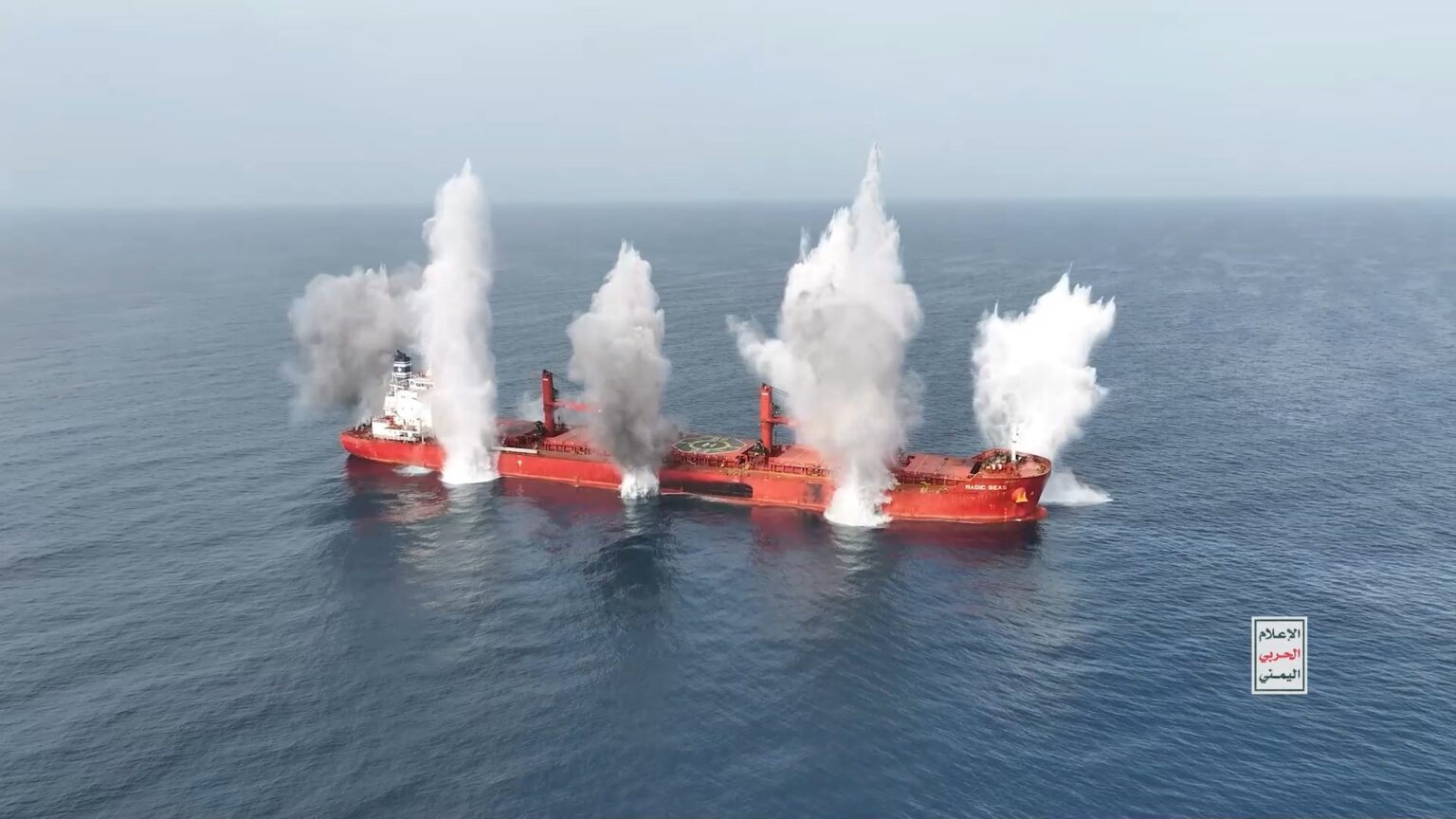 Bulk carrier Magic Seas was sunk by Houthi rebels in july 2025 (source: Houthi Military Media Centre)
Inleiding
The boarding and hijack of the Galaxy Leader and her crew by Houthi forces in November 2023 did more than just signal the start of a crisis; it fundamentally reshaped our perception of international shipping security. It highlighted the critical importance of our mariners and their safety. This reality check made us realize that the world—and its maritime dimension in particular—is becoming increasingly volatile.
By the time this article was drafted (January 2026), the crisis had made international headlines with a toll of 116 incidents: 100 reported attacks on international merchant shipping, four vessels sunk, and nine lives lost.[i] This remains an ‘unfinished’ crisis; the primary factor deterring the Houthis from continuing their attacks is the fragile ceasefire agreement in Gaza. Currently, international military authorities such as the Joint Maritime Information Center (JMIC) assess the general threat level against merchant vessels as ‘moderate’.[ii]
From the beginning of the crisis, Houthi rebels have maintained what can be described as a ‘virtual maritime blockade’ against merchant shipping fitting their targeting profile. By establishing specific conditions under which vessels would be attacked, they enforced Sea Denial upon international shipping through both direct and indirect threats. Approximately 12% of global trade passes through the Red Sea, making it one of the world's most pivotal maritime straits.[iii]
Since the summer of 2024, Suez Canal transits have been reduced to less than 60% of their average capacity.[iv] Meanwhile, the risk of the Houthis evolving into a permanent maritime actor—with the capability to control trade through the Bab el-Mandeb (BAM) strait—remains a grave concern for the international community.
The last reported major incident, in September 2025, involved the Dutch-flagged vessel Minervagracht. The attack disabled the vessel and claimed the life of one mariner.[v] As the first Dutch-flagged vessel attacked in this crisis, the Minervagracht underscored the vulnerability of our fleet and the urgent need to address this threat, regardless of the uncertainty surrounding its resolution.
 Heatmap of Houthi-related maritime attacks between from 2023 to 2026 (source: monthly report JIMC | December 2025)
In 2026, we observe that this crisis has placed a disproportionate responsibility on the shoulders of commercial operators—costing resources, business, and, most tragically, human lives. Maritime security should be an enabling force, especially when the lives of our sailors are at stake. This article analyzes the operational status quo of the Dutch merchant fleet from a critical perspective, based on the author's operational experience and the expertise of his organization. It addresses the effects, the responses by Dutch authorities, and the strategic impact on our maritime industry.
The Netherlands’ Approach: Protection or Denial?
For Dutch-flagged shipping, the Red Sea crisis has become an area of extraordinary security risk, resulting in operational constraints that go beyond the standard commercial decision-making processes.
Following the hijack of the Galaxy Leader and subsequent attacks – three in December 2023 and eleven in January 2024 – the threat assessment for this volatile area changed drastically. The uncertainty of the Houthi targeting profile and the heightened risk to seafarers prompted the Netherlands, like many other nations, to take measures to ensure the safety of vessels and crew. Consequently, since December 2023, the Dutch Government has designated the Red Sea, the Bab el-Mandeb Strait, and the Gulf of Aden as ISPS Code Level 3 areas, issuing a negative transit advice for Dutch-flagged vessels. The International Ship and Port Facility Security (ISPS) Code is a security regime under the International Convention for the Safety of Life at Sea (SOLAS), Chapter XI-2.[vi] The Netherlands has been a signatory and contracting party of the Convention since 1980.[vii]
For Dutch-flagged shipping, the Red Sea crisis has become an area of extraordinary security risk.
As a procedural and preventive system, the ISPS code allows for different Maritime Security Levels (MARSEC) depending on the threat and risk level existing in different areas of the world. In the case of MARSEC 3, its application implies an exceptional and imminent threat from a maritime security perspective, triggering the implementation of the highest level of security measures for a limited period of time. This sometimes involves a restriction of navigation on commercial shipping and cargo operations, and it requires active involvement and coordination of the national authorities of the implementing state. Implementation (and enforcement) of the ISPS Code can be divided into two main application frameworks: coastal based and vessel-based implementation.
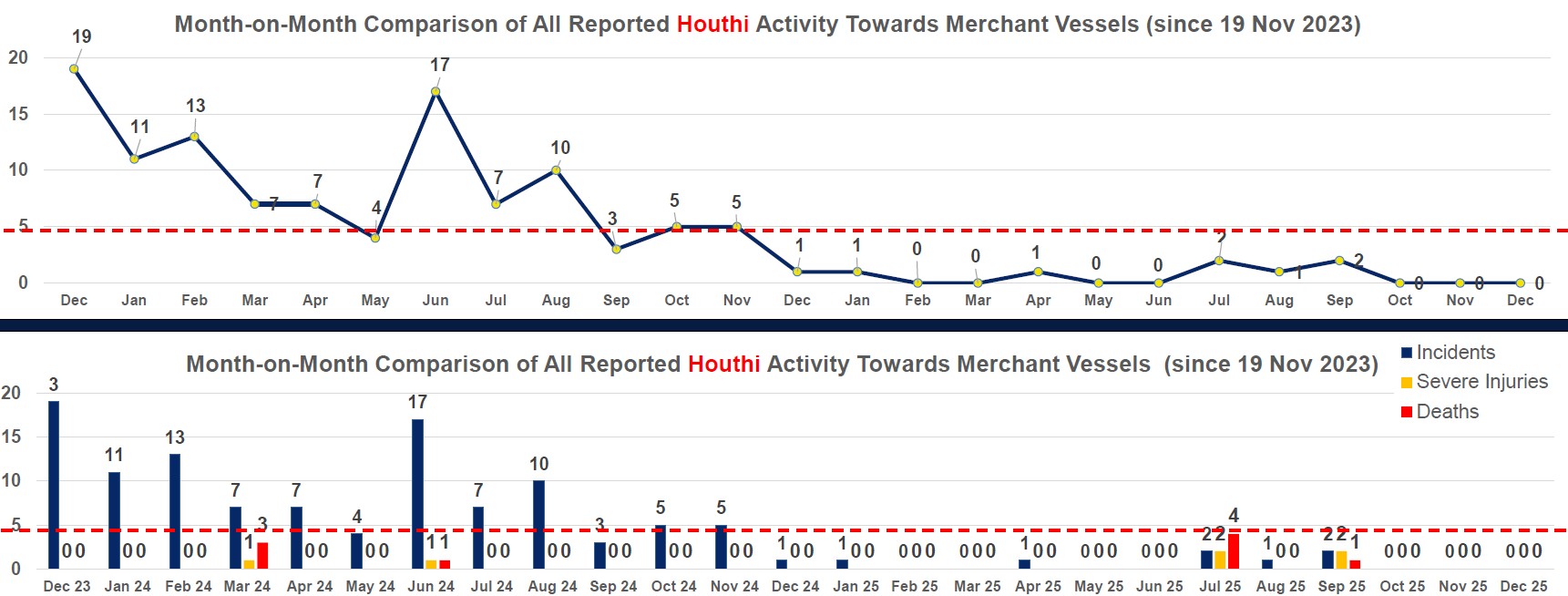 Month-on-month comparison of all reported Houthi activity towards merchant vessels since 19 november 2023 (source: JIMC)
Coastal/national waters implementation means a coastal state can issue – and actively enforce the application of ISPS Code Levels zone-wise, in their internal waters, territorial sea (up to 12 NM), and port facilities. This means that, in the case of establishment of a MARSEC 3 level, the invoking state can restrict or deny access to certain waters of their jurisdiction, establish exclusion zones, or enforce no-sail or conditional transit areas while. Vessels – regardless of their flag, infringing these restrictions can be subject to penalties or intervention by national authorities. This enforcement is subject to the rules governing the right of innocent passage as per the United Nations Convention of the Law of the Sea (UNCLOS), articles 17 to 25.
Vessel-based implementation means vessels flying the invoking states’ pavilion, the corresponding Flag State Administration (or equivalent institution) can establish ISPS Code (MARSEC 1,2 or 3) measures to be applied onboard said vessels. This can be applied anywhere in the world, and the vessels must adapt their security level to transit through the designated areas by the Flag Administration. The implementation of these measures is done via the Ship Security Plan (SSP), instructions to Company Security Officers (CSOs) and Ship Security Officers (SSOs), or Flag State communications. The invoking state remains responsible for the oversight, the establishment of audits and reviews to ensure that the vessels are applying the established measures, and, in case of infraction, the enforcement of penalties. In the case of MARSEC 3, vessels that are to transit through an ISPS 3 Area, designated by their Flag Administration, are required to enforce the strictest levels of maritime security conditions onboard, overseen by the corresponding national Flag Administration.
It is fundamental to understand that the ISPS Level 3 – both in its national waters or vessel-based implementation frameworks – is not meant to be a permanent or of long-term warning. It is defined as an exceptional, time-bound, and continuously reassessed tool to ensure the safety of vessels and crew. As an exceptional measure, monitoring the threat, its evolution, and the provision of regular updates - including the study and return to a regular ISPS Level (either MARSEC 1 or 2) - is one of the responsibilities of the state and its authorities.
Furthermore, it is the social responsibility of the invoking state, when it comes to ISPS MARSEC 3, to ensure that the responsible authorities have enough capabilities to establish an operational verification and compliance of the ISPS measures and how these are applied on the vessels transiting heightened risk areas of the world.
The ISPS Code, however, does not interfere with the principle of Freedom of Navigation, as coded in Article 87 of the United Nations Convention of the Law of the Sea: vessels of any nation have the right to sail high seas and international waters without undue interference, including the right to transit maritime straits such as the Gulf of Aden and the Red Sea, as long as they adhere to the specific security measures necessary to transit the region.
In summary, under SOLAS Convention, ISPS Code establishes the security obligations for both vessels and administrations but does not constitute a legal instrument for denying navigation in international waters. It is only enforceable in national waters, for a strict limited period of time, and under specific and constantly reassessed conditions.
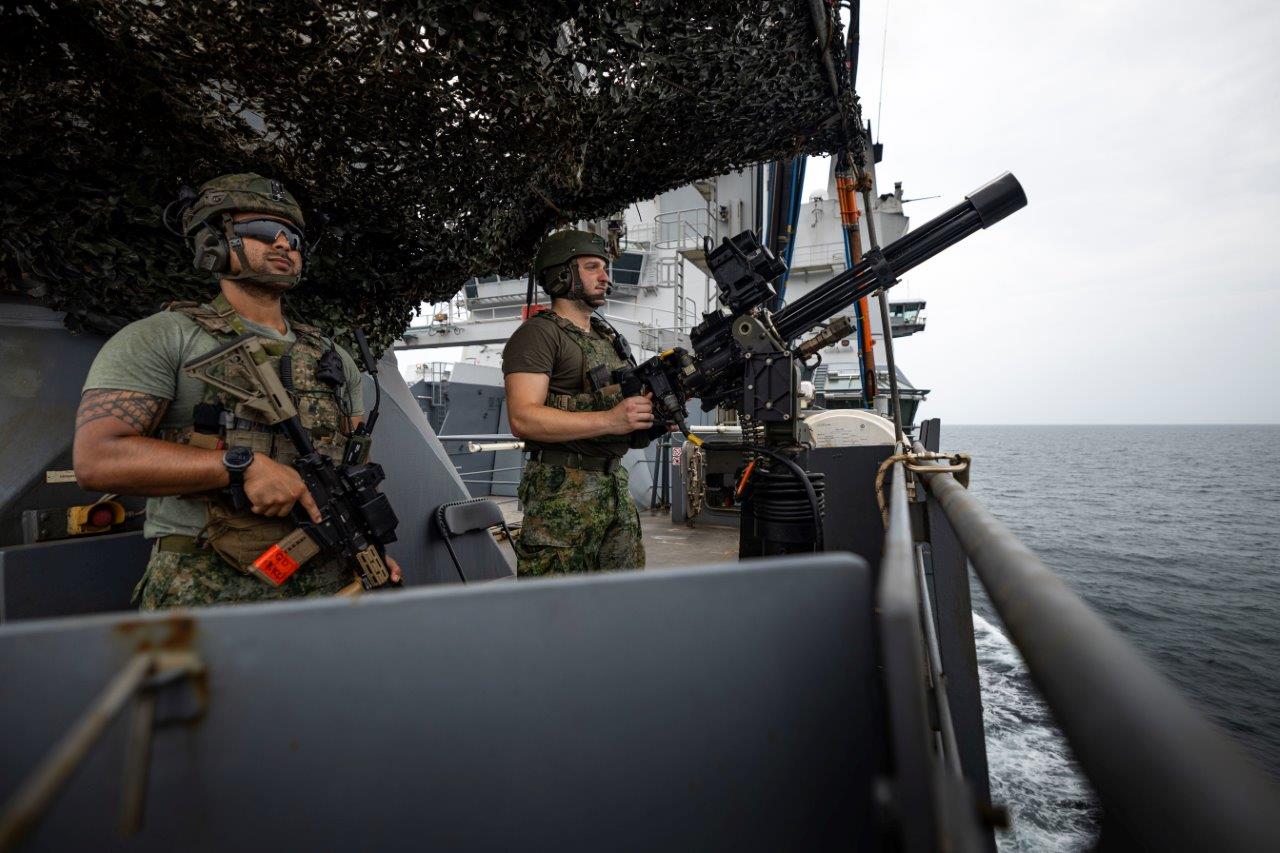 A Royal Dutch Marines protection unit on board HMNLS Karel Doorman during operation Aspides, July 2024 (B. Westerveld | Mediacentrum Defensie)
A challenge unanswered
Nevertheless, the Red Sea Crisis defined a high-threat environment for international shipping, creating a new security reality that still lingers today. In situations like this, the impact of established security frameworks relies not only on formal navigation rights, but on the availability of lawful and protective measures to ensure free navigation in these areas of heightened risk.
In this context, the elevated threat level also affected the deployment of onboard protection. In the case of The Netherlands, this is done via the Wet ter Bescherming Koopvaardij (WtBK), which regulates the deployment of armed protection onboard Dutch-flagged vessels when transiting through designated high-risk areas of the world, including the Red Sea and Gulf of Aden.[viii]
Since December 19, 2023, the Dutch Government decided that the threat level was too high for Dutch shipping to sail in the area, with or without security. Thus, the deployment of Vessel Protection Detachments, a specialized unit of the Royal Netherlands Navy focused on the onboard protection of merchant vessels, was revoked. As per article 4.2. of the WtBK, when the RNLN declares that a vessel is not eligible for VPD protection, protection by private maritime security companies is also not permitted.[ix] This link between our military and private maritime security providers is unique in the world. Former Defense Minister Kajsa Ollongren, when asked about this decision by the NOS in February ‘24, stated: ‘We are talking about cruise missiles, about drones with weapons. You have to deal with them in a different way than smaller boats with armed pirates,’ she said to NOS. ‘At the moment, there is a very serious threat from the situation there. It is not wise to sail there now.’[x]
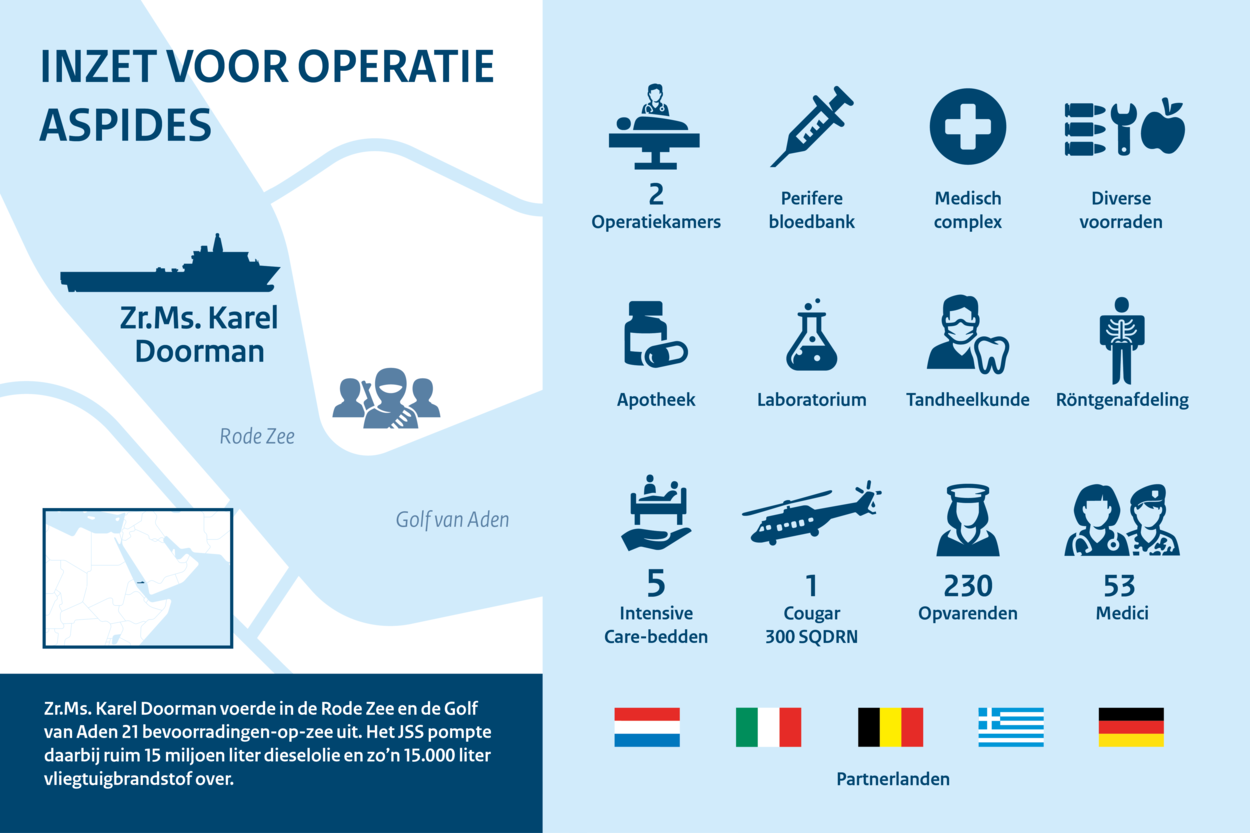 Infographic on deployment of Dutch logistics vessel HNLMS Karel Doorman as part of EUNAVFOR Aspides in 2024 (source: Royal Dutch Navy)
As a result, The Netherlands has actively contributed since early ‘24 in active missions and operations to reduce the military capabilities of the Houthis and ensure the freedom of navigation through the BAM: Military Intelligence and Naval Cooperation and Guidance for Shipping (NCAGS) personnel as part of Operation Prosperity Guardian, U.S.-led operation under the umbrella of Combined Maritime Forces; Intelligence support for Operation Poseidon Archer, an offensive operation to attack Houthi land-based objectives and reduce their targeting capabilities; NCAGS and analyst officers deployed to Bahrain as part of the JMIC team; and the deployment in ‘24 of the frigate HNLMS Tromp and the logistics vessel HNLMS Karel Doorman as part of EUNAVFOR Aspides, a European defensive operation launched early ‘24 to ensure the protection of merchant trade and seafarers in the area.[xi]
However, despite the efforts to ensure the freedom of navigation in the region, the cumulative effect of security requirements and protection constraints resulted, since ‘24, in a de facto absence of Dutch-flagged commercial traffic from the region. The only exception being the 31 Dutch-flagged vessels, that, by January ‘26, are operating the waters of nearby countries of Yemen, but do not carry out sea-going operations.[xii]
Since early ‘24, Dutch shipowners have not been able to actively sail through the Red Sea and Gulf of Aden, leaving an increasing number of contracts, tasks, and operations in hands of their competitors
From operational deadlock to strategic consequences
In my daily life I have the honor of speaking to Dutch shipowners, captains, CSOs, and other representatives of the NL shipping industry. While discussing current risks for Dutch shipping companies, a quote got engraved in my mind: ‘To me, my sailors, my people, are like my family. If I would not send my son there under any condition, why would I do so with my people now?’
This statement, outside of the operational context, showcases the unique and noble nature of the Dutch shipping community, of which I am proud to be part of. In ‘26, the flow of the Dutch shipping has been almost fully regulated into a new reality; sailing around the Cape of New Hope; the implementation of fleet modifications to adapt to the new timetables and availability; and the establishment of additional costs based on route, time, and logistics to the client, and subsequently, to the consumer.[xiii]
However, this ‘new reality’ does not eliminate the core elements of sea-going shipping: competition and profit. Since early ‘24, Dutch shipowners have not been able to actively sail through the Red Sea and Gulf of Aden, leaving an increasing number of contracts, tasks, and operations in hands of their competitors. Competitors that, able to sail through this area, can perform faster, cheaper, and more efficiently than our shipping industry.
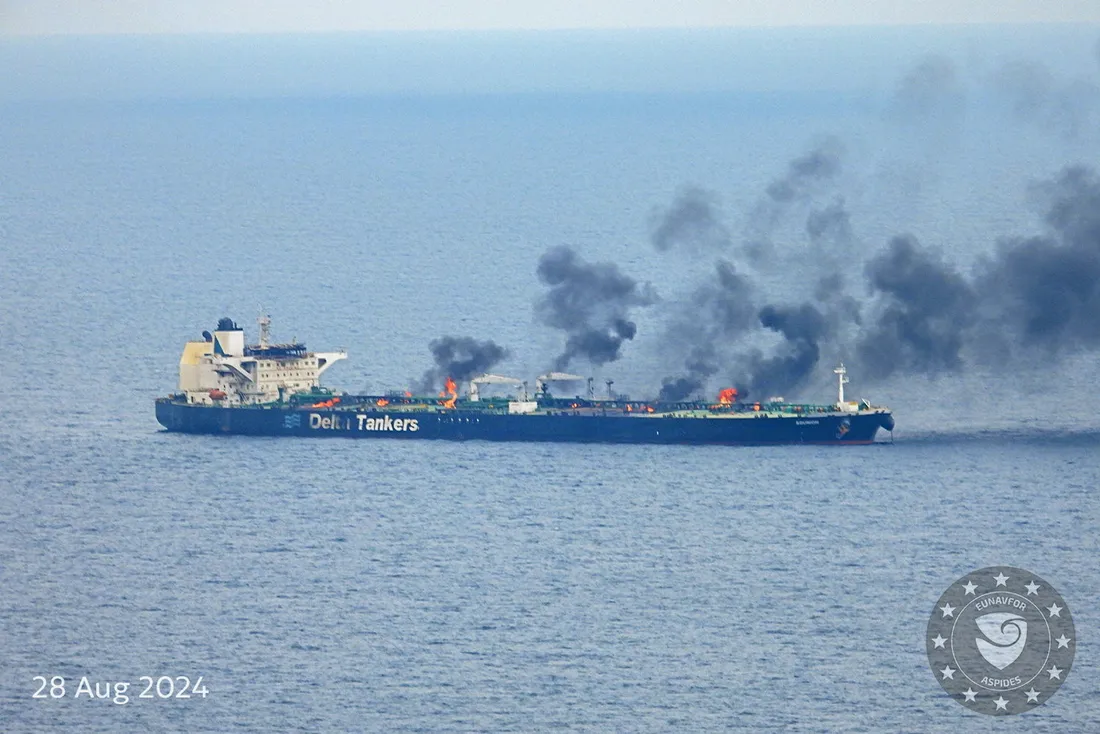 The Sounian on fire after being struck, 28 august 2024 (source: EUNAVFOR Aspides)
Where can we find the issue? As established before, ISPS Code establishes a series of security conditions which vessels transiting certain areas must implement but does not deny freedom of passage as per SOLAS. Shipowners’ concern for the safety of their crews, on the other hand, played a key role in the early stages of the crisis, as uncertainty about the targeting profile of the Houthis and the effectiveness of the ongoing military operations were developing. However, the revoking of the deployment permit for security personnel onboard Dutch-flagged vessels, and the rejection of any request for deployment as of today, according to corporate sources, created a legal deadlock that touched upon one of the most relevant elements of the shipping world: insurance.
With the removal of the security personnel, Dutch vessels willing to transit the region, were exposed to increased war-risk and insurance premiums, removing one of the key mitigating factors normally available in high-risk maritime environments. The presence of this security, despite not being effective against the Houthi threat, is perceived by the insurance underwriters as a mitigation measure taken by the shipping company. As a result, some insurers may increase the already expensive cover – up to 2%, or even deny coverage, forcing companies to pay top-tier premiums or seek alternative coverage arrangements.[xiv]
Together, these factors created a situation in which the exercise of navigation rights through the BAM remained legally intact, but operationally and commercially unsustainable. This situation remains today, two years later.
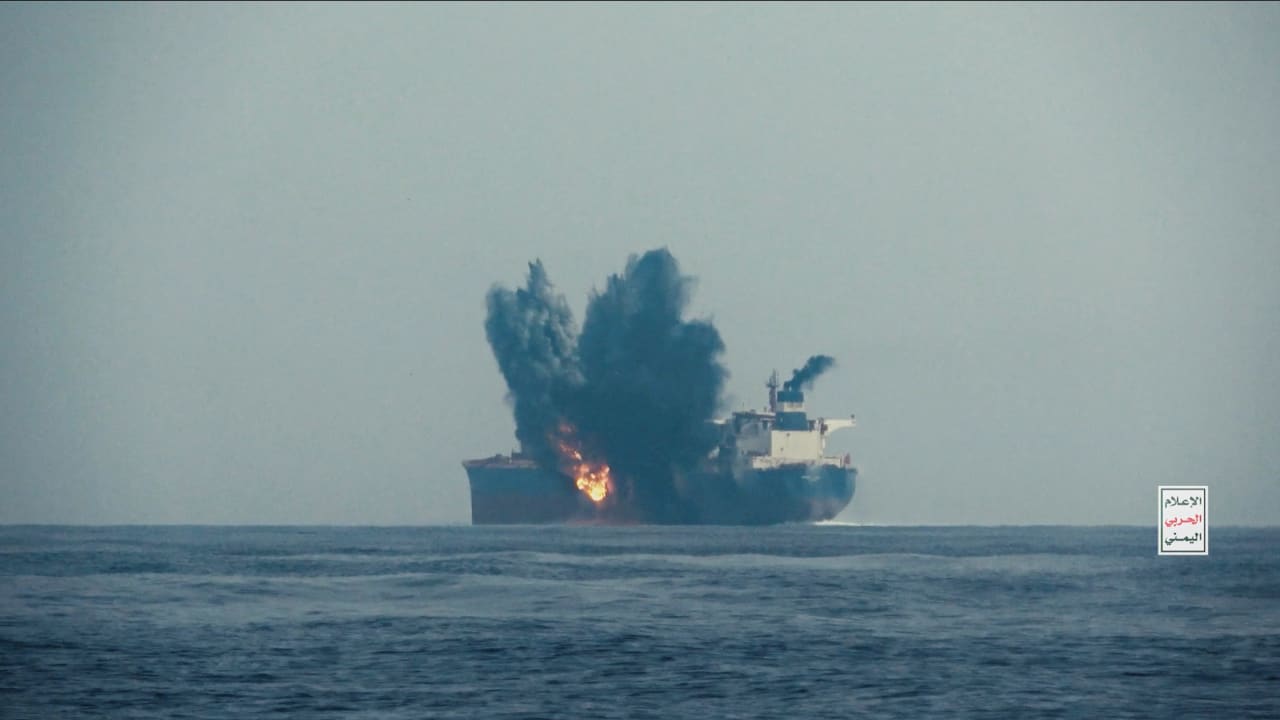 The Cordelia Moon erupts in flames after a Houthi missile hit the tanker off the coast of Yemen, October 2024. Incredibly, the ship was able to continue under its own power (Houthi Military Media Center)
The Dutch flag, a pavilion worth fighting for
The Netherlands Flag Registry has approximately 1200 vessels under our flag.[xv] Furthermore, talks are being held for the creation of a Netherlands Maritime Authority (NLMA), which shows the importance of the Dutch Flag and the sustainability of the register.[xvi] The Netherlands is a maritime nation; its way of living is based and bound to the sea, and shipping plays a key role in the country’s economy and development, with a contribution of around 3% of the national GDP.[xvii]
Nonetheless, events like the Red Sea Crisis are a stress test on our shipping industry. Although there is not yet systematic evidence of Dutch ownership reflagging vessels explicitly in response to the Red Sea and Gulf of Aden threat, industry sources indicate that some operators have arranged other flags during transits when feasible.[xviii] This is a challenge that links to the future of our national security and strategic leverage, not only for our companies, but of the Dutch shipping industry as a whole. ‘Military authorities (public authorities in general) own threats; commercial entities own the risks.’
Real maritime security is measured not by the severity of restrictions imposed, but by the ability of a nation to sustain safe and lawful navigation in high-risk conditions. Thus, a flag only retains its value through the State’s demonstrated ability to protect, enable, and support its fleet under threat.
Today, the threat level has been reduced considerably, with the last attack taking place in September ‘25 and the overall assessment indicating a moderate-to-low risk for international shipping. However, the threat is not gone; the Houthis still have the capabilities and the means to deny maritime trade once again. In January ‘26, EUNAVFOR ASPIDES reported only two active naval assets in the area[xix]. The Netherlands, since summer ‘24, has not deployed another unit to ensure the stability in the region.
The incident involving the Minervagracht should act as a gentle reminder of what is at stake.
When security postures persist without parallel mechanisms to enable a lawful protection and proactive risk mitigation, the burden of the threats disproportionately shifts on the shoulders of commercial operators. The incident involving the Minervagracht should act as a gentle reminder of what is at stake.
Conclusion
If the Dutch flag is to remain a viable and credible symbol of global trade, quality, and safety, our maritime security policy must move from restriction towards enablement. This requires a critical reassessment of the existing frameworks and the establishment of a comprehensive, whole-of-government approach, that understands maritime security as a shared responsibility. An approach that integrates naval protection, regulatory flexibility, insurance realities, and the full spectrum of national maritime security expertise.
Without such alignment, there is a real risk that operational decisions driven by security and insurance constraints will gradually erode the strategic and commercial value of our flag. A flag that we need to be proud of sailing under.
Santiago José del Castillo works as Naval Liaison at ESS Maritime in Amsterdam.
DISCLAIMER: This opinion article is based on publicly observable shipping industry effects, and operational experience only. As the only Dutch maritime security company of the world directly involved in maritime security procedures and vessel protection in high-risk areas, including the Red Sea and Gulf of Aden, ESS Maritime observes firsthand how maritime security challenges and its corresponding requirements affect operational decisions.

Noten
[i] JMIC Monthly Statistics – December 2025.
[ii] Israeli merchant vessels or shipping companies (or those affiliated to Israel) are considered under ‘moderate’ threat. See: JMIC Monthly Statistics – December 2025.
[iii] https://news.usni.org/2024/03/14/houthis-threaten-to-target-merchant-ships-in-indian-ocean
[iv] https://www.bimco.org/news-insights/market-analysis/shipping-number-of-the-week/2026/0107-snow/
[v] https://www.imo.org/en/mediacentre/secretarygeneral/pages/statement-on-mv-minervagracht.aspx
[vi] https://www.imorules.com/SOLAS_REGXI-2.html
[vii] https://treaties.un.org/pages/showDetails.aspx?objid=08000002800ec37f
[viii] https://wetten.overheid.nl/BWBR0042278/2022-02-01
[ix] https://wetten.overheid.nl/BWBR0042278/2022-02-01
[x] https://nltimes.nl/2024/02/05/dutch-shipping-companies-want-armed-security-board-red-sea-voyages
[xi] See also: Beusekom, Y.A. van, ‘Inzet Zr.Ms. Tromp in Operation Prosperity Guardian’, Marineblad, nr. 7 (november 2024), 4-11
[xii] ESS Maritime.
[xiii] https://bluedepths.substack.com/p/how-did-we-get-here-and-when-will
[xiv] https://www.shipuniverse.com/news/key-insurance-rates-double-amid-rising-conflict-zones/
[xv] https://nlflag.nl/why-fly-dutch-flag
[xvi] https://kvnr.nl/en/news/maritime-authority
[xvii] https://swzmaritime.nl/news/2024/01/10/maritime-industry-becomes-more-important-for-dutch-economy/
[xviii] https://www.dutchnews.nl/2024/02/shipping-firms-call-for-red-sea-vessels-to-have-armed-guards/
[xix] https://www.linkedin.com/posts/eunavfor-operation-aspides_eunavfor-aspides-operating-under-a-activity-7416004113555116032-qV_e?
Gerelateerd

Tri-marines: vertrouwde en interoperabele partners op het slagveld
Het Korps Mariniers kent een lange geschiedenis en voelt een sterke verbintenis met amfibische families bestaande uit vele bevriende…

The future of Transatlantic relations
In the coming years, the key in the transatlantic relations lies to sail as close to the wind as possible between total commitment and…

Europe's Maritime Challenges Examined
From 6 to 8 April 2025, fourteen international academics and naval professionals gathered in Rotterdam to examine the strategic challenges…

